
Introduction
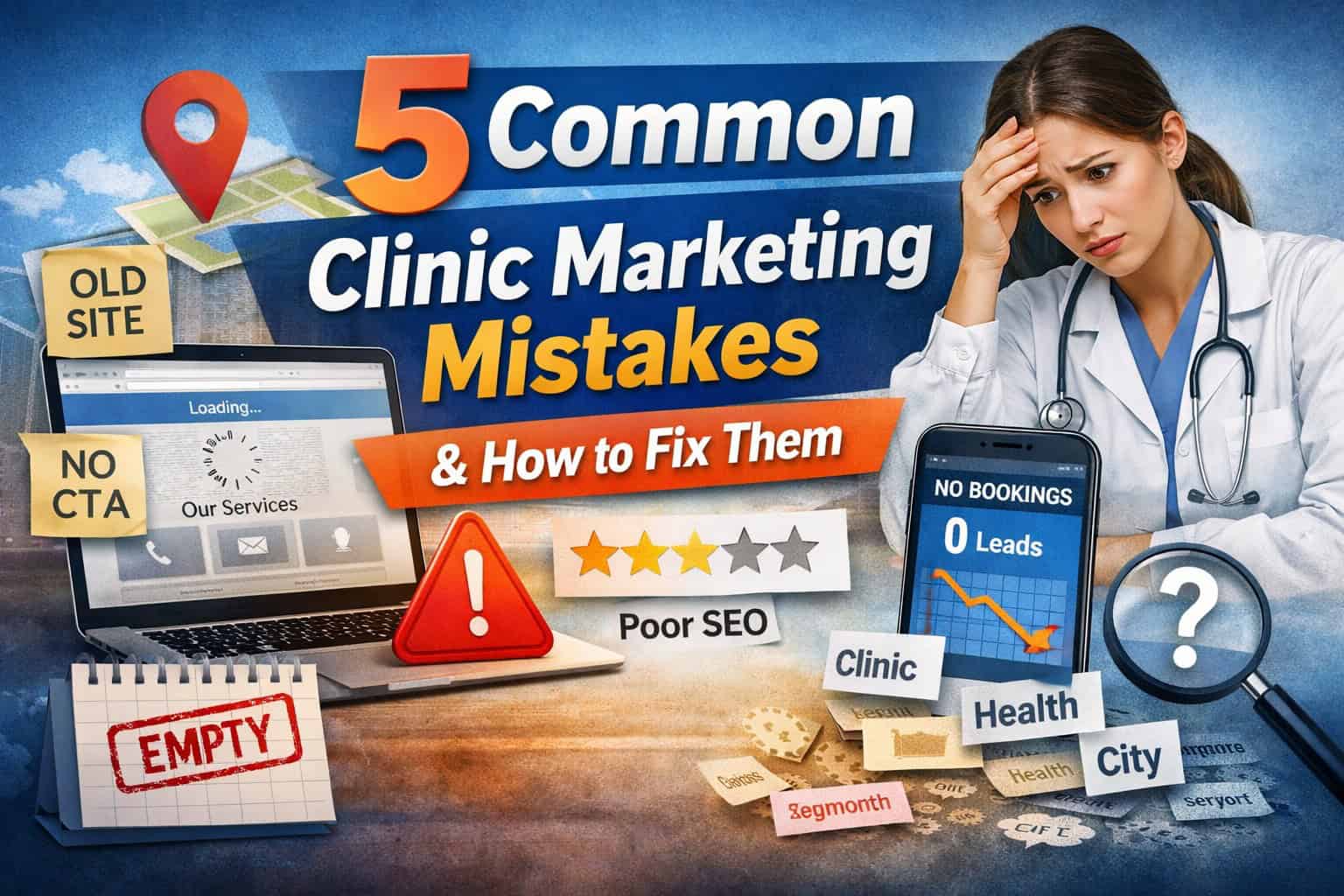
Marketing mistakes in the healthcare sector can cost clinics, hospitals, and doctors patients, revenue, and trust. In today’s competitive market, healthcare providers need to do more than just offer quality care — they also need a smart marketing strategy. This article will discuss common clinic marketing mistake patterns, their causes, and practical solutions that you can implement quickly.
Mistake 1: Treating the Website Like an Old Brochure (A Common Marketing Mistake)
What goes wrong:
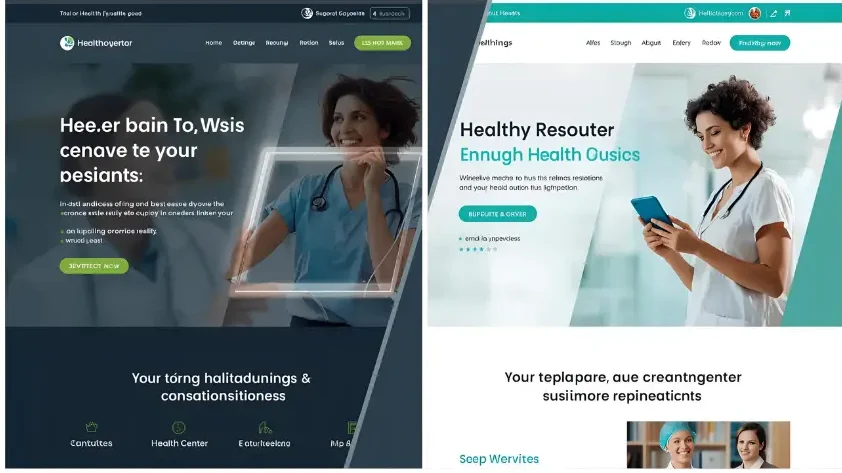
The website is slow, out-of-date, static, and not responsive. There isn’t a clear call to action (CTA); it just lists your services and contact information. Finding what they need or scheduling appointments is difficult for visitors.
Why it matters:
Your website is often the first point of contact, so first impressions are crucial in avoiding a critical marketing mistake.
Visitors leave quickly if the site is slow or unclear.
Mobile traffic is prevalent, so a site that’s difficult on phones loses potential patients.
How to fix:
Redesign with readability and speed in mind.
Make the website mobile-friendly, with easily accessible buttons, booking forms, and contact info.
Highlight services, physician biographies, client endorsements, and a prominent CTA (“Book Now,” “Call Today”) on your homepage to avoid this marketing mistake.
Mistake 2: Not Knowing Your Ideal Patient or Target Audience (Major Marketing Mistake)

What goes wrong:
“We serve everyone” is a generic marketing message and a frequent marketing mistake. Ads are generic and don’t address patient concerns.No segmentation by geography, diseases, or demographics.
Why it matters:
People respond to content that feels relevant and personal; broad messaging is an avoidable marketing mistake.
Spending money on individuals who are unlikely to become patients is a waste.
When people don’t recognize themselves in your messaging, conversion rates decline.
How to fix:
Describe your “ideal patient” characteristics, including their age, location, health, and concerns.
Tailor content, ads, landing pages to those individuals. For instance, an elderly patient seeking chronic care versus a parent of a child with allergies.
Use geotargeting and demographics in your advertisements, and use language that appeals to your target audience to correct this marketing mistake.
Mistake 3: Ignoring Local SEO & Location-Based Keywords (Local Marketing Mistake)
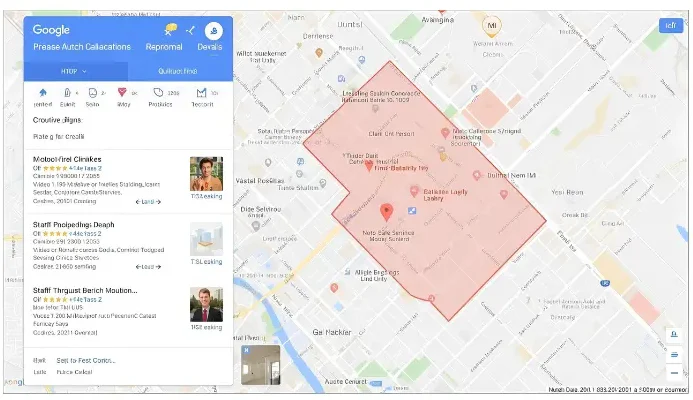
What goes wrong:
The website lacks a location and only uses generic keywords like “health clinic” and “dentist,” which is a common marketing mistake. Google Maps and Business Profiles are not updated or optimized. Name, address, and phone (NAP) information varies between directories.
Why it matters:
The majority of patients look for “clinic near me” or “dentist in [City]”; if you’re not localized, this marketing mistake will cost visibility.
Good reviews and local directories increase visibility and trust.
Relevance is favored by search engines; location plus service makes you more visible.
How to fix:
Make use of location-based, long-tail keywords, such as “dental clinic Kathmandu” and “skin clinic Patan Nepal.”
Take control of and improve your Google Business Profile, including your images, services, and reviews.
Make sure your website, directory listings, and Google maps all have consistent NAP (Name, address, Phone) to eliminate this marketing mistake.
Mistake 4: Overloading Keywords / Using Wrong Keywords (“Keyword Stuffing” Marketing Mistake)

What goes wrong:
Attempting to fit as many keywords as you can into each line, which is a serious marketing mistake. Utilizing highly competitive but low-converting, extremely general keywords. Ignoring search intent, or what people are actually looking for.
Why it matters:
Keyword stuffing lowers the readability of content and receives penalties by search engines, making it a harmful marketing mistake.
Inappropriate or overly general keywords bring in visitors who are unlikely to convert.
Wasted resources result from low conversion despite traffic.
How to fix:
Maintain a balance between long-tail and short-tail keywords.
Pay attention to user intent and keyword connection. For example, a search for “how much do braces cost in Kathmandu” has a higher intent than “braces.”
Don’t force keywords into headings, meta descriptions, or titles; instead, use them organically to avoid this marketing mistake.
Mistake 5: Running Ads or Marketing Campaigns Without Clear Strategy or Tracking (Costly Marketing Mistake)

What goes wrong:
Ads began without clear objectives or KPIs, which is a costly marketing mistake. Inadequate tracking of conversions (website forms, phone calls, and booking buttons).Campaigns that have not been split-tested or optimized.
Why it matters:
You cannot determine whether a campaign is effective if you do not know which metrics are important.
Ad spend is wasted due to poor conversion tracking, a frequent marketing mistake.
Low ROI results from not refining or split-testing.
How to fix:
Establish success criteria before launch, such as the quantity of reservations, calls, income, etc. Set up conversion goals and install analytics tools (such as Google Analytics and Facebook/Meta Pixel).Track which channels produce the best results and use UTM parameters for advertisements.Conduct A/B tests on landing pages, CTA buttons, and ad copy to fix this marketing mistake.
Summary: Fixing Clinic Marketing Mistakes
If you want to turn your clinic’s marketing around and eliminate every marketing mistake:
Audit everything: website, content, ads, lead flow.
Define your audience clearly: pick 2–3 ideal patient profiles and speak to them.
Prioritize quick wins: local SEO, mobile optimization, improving speed, setting up tracking.
Test and refine: small changes (headings, images, CTAs) often produce outsized improvements.
Diversify channels so you aren’t relying on one (that might underperform someday).
Drive Predictable Growth with a Strategic Healthcare Marketing Agency
We at IT Relevant assist healthcare organizations such as clinics, hospitals, and physicians in avoiding costly marketing mistake patterns and attaining steady and quantifiable growth, rather than irregular increases in patient or website traffic.
Our data-driven strategy integrates social media, paid advertising, SEO, and conversion optimization to make sure your marketing is founded on tried-and-true tactics rather than conjecture.
Our main goals are to draw in the right patients, increase your online presence, and convert that presence into consistent monthly patient appointments.
✅ Long-Term Growth
✅ Measurable ROI
✅ Predictable Results
Collaborate With a Results-Driven Healthcare Marketing Firm
Since IT Relevant focuses only on the healthcare industry, unlike generic marketing firms, we understand how to prevent common marketing mistake issues related to patient behavior, medical ethics, and clinic marketing laws.
Through customized tactics that truly produce results, our team works closely with you to increase trust, draw in ideal patients, and increase clinic revenue.
Everything we do, from content marketing and advertisements to website design and local SEO, is geared toward the same objective: assisting your healthcare company in expanding—without repeating the same marketing mistake again.